
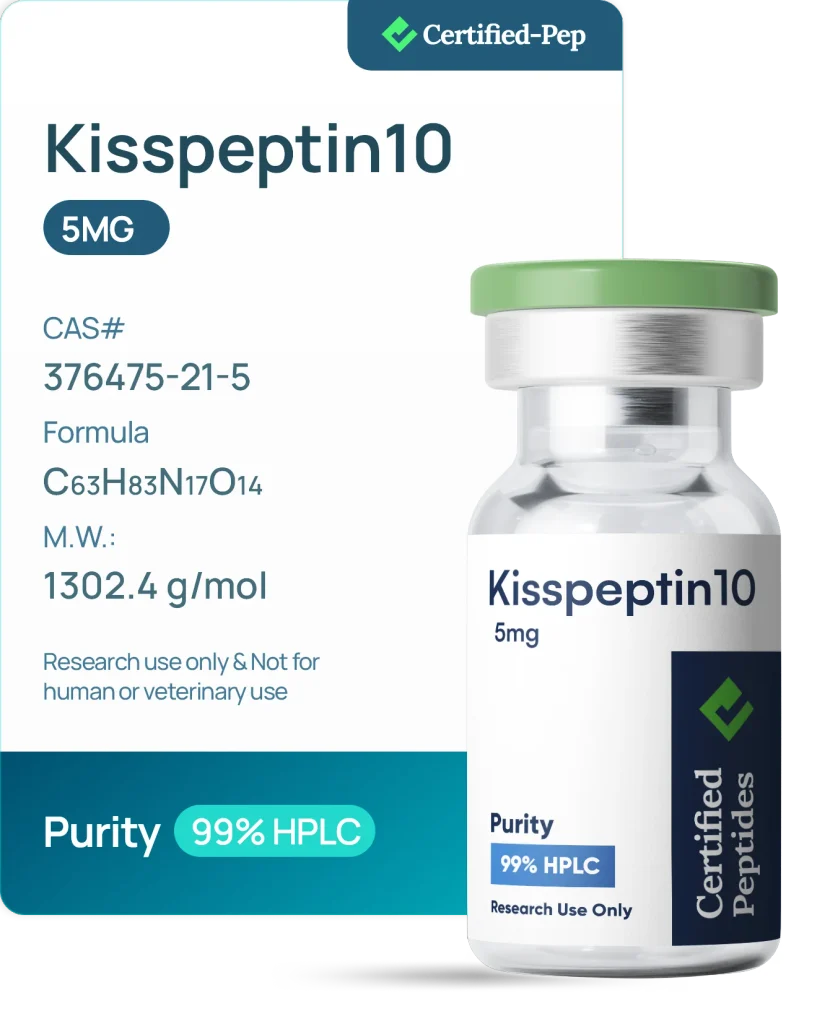
In contemporary neuroendocrinology research, Kisspeptin-10 5mg for sale in the USA has emerged as one of the most critical peptide sequences for investigating the hypothalamic-pituitary-gonadal (HPG) axis. Discovered originally as a metastasis suppressor, the KISS1 gene product is now recognized as the master upstream governor of mammalian reproductive physiology.
For researchers utilizing the highly potent Kisspeptin-10 5mg lyophilized peptide, understanding its molecular architecture, binding dynamics, and physiological impacts in laboratory models is essential. This article reviews the core science, experimental benefits, and standard reconstitution protocols driving current Kisspeptin-10 clinical research.
What is Kisspeptin-10?
Kisspeptin-10 (Kp-10) is a biologically active, 10-amino-acid decapeptide fragment derived from the parent 145-amino-acid Kisspeptin protein. While full-length variants like Kisspeptin-54 exist natively in the human body, research shows that the shortened C-terminal sequence (YNWNSFGLRF-NH2) retains full binding affinity and intrinsic bioactivity.
In laboratory assays, Kisspeptin-10 serves as the primary endogenous ligand for the G-protein coupled receptor GPR54 (also known as the KISS1R receptor).
The Hormonal Cascade Mechanism
When Kisspeptin-10 binds to GPR54 receptors located on hypothalamic neurons, it triggers a powerful downstream endocrine cascade:
- GnRH Release: Direct stimulation prompts the secretion of Gonadotropin-Releasing Hormone.
- Gonadotropin Production: GnRH moves to the anterior pituitary gland, driving the pulsatile release of Luteinizing Hormone (LH) and Follicle-Stimulating Hormone (FSH).
- Endogenous Steroid Synthesis: Elevated LH and FSH subsequently signal the gonads to synthesize natural testosterone or estrogens.
Because it operates at the top regulatory layer of the endocrine system, the Kisspeptin-10 5mg peptide vial is extensively utilized across several distinct investigational fields.
- Natural Testosterone Optimization Mechanisms
A major focus of clinical studies involves evaluating Kisspeptin-10’s capacity to stimulate natural testosterone production without inducing endocrine shutdown. Unlike traditional exogenous testosterone placement protocols which suppress the body’s natural axis, Kp-10 relies on the natural negative-feedback loop. Research models indicate that acute bolus doses can rapidly boost serum LH pulse frequency and elevate baseline testosterone within 30 to 45 minutes.
- Reproductive Longevity and Fertility Preservation
In reproductive medicine studies, Kisspeptin signaling pathways are analyzed for their ability to maintain spermatogenesis and mitigate testicular atrophy in male subjects. In female fertility research, particularly within in-vitro fertilization (IVF) models, researchers study Kisspeptin variants as safer alternatives to Human Chorionic Gonadotropin (hCG) to trigger oocyte maturation while lowering the risk of Ovarian Hyperstimulation Syndrome (OHSS).
- Neurobehavioural Arousal and Limbic Processing
Beyond simple hormone modulation, functional MRI (fMRI) brain imaging studies show that Kisspeptin-10 activates key limbic structures associated with mood, emotional processing, and romantic attraction. Researchers frequently study its pathways to understand Hypoactive Sexual Desire Disorder (HSDD) and reward-center signaling independent of baseline peripheral hormone values.
Kisspeptin-10 vs. HCG vs. TRT: Experimental Differences
To clarify how Kisspeptin-10 functions differently from other common comparative therapies, researchers rely on distinct biochemical profiles:
Compound Primary Site of Action Impact on HPG Axis Feedback Principal Research Endpoint
Kisspeptin-10 Hypothalamus (GPR54 Receptors) Supports / Balances endogenous signaling Pulsatile LH/FSH restoration & neuro-emotional signaling
HCG Testes / Ovaries (LH Receptor Mimic) Bypasses the brain; suppresses upstream GnRH over time Direct gonadal stimulation and temporary fertility support
TRT Peripheral T-Receptors Suppresses the entire HPG axis; halts LH/FSH production Steady-state synthetic hormone replacement
Reconstitution and Laboratory Storage Standards
To preserve a 99% purity profile, Kisspeptin-10 5mg lyophilized powder requires meticulous laboratory handling.
- Reconstitution: Bring the vial to room temperature before introducing a sterile bacteriostatic water diluent. Gently swirl the solution—do not shake vigorously, as this can denature delicate peptide bonds.
- Storage Temperature: Store the raw lyophilized powder in a controlled environment at -20°C for long-term stability. Once reconstituted, fluid aliquots should be kept refrigerated at 2°C to 8°C and utilized within a 30-day window.
- Receptor Desensitization Note: In continuous high-dose infusion models, investigators must watch for tachyphylaxis—a state where continuous exposure downregulates the GPR54 receptors, temporarily diminishing the LH response. Intermittent or cycled dosing schemas are standard in most literature protocols to maintain receptor sensitivity.
Summary of Research Specifications
- Core Entity: Kisspeptin-10
- Molecular Formula: C₆₃H₈₃N₁₇O₁₄
- Molecular Weight: 1302.46 g/mol
- Primary Target: Hypothalamic GPR54 (KISS1R) Receptors
- Regulatory Status: Investigational research compound; not approved for human consumption or self-administration