
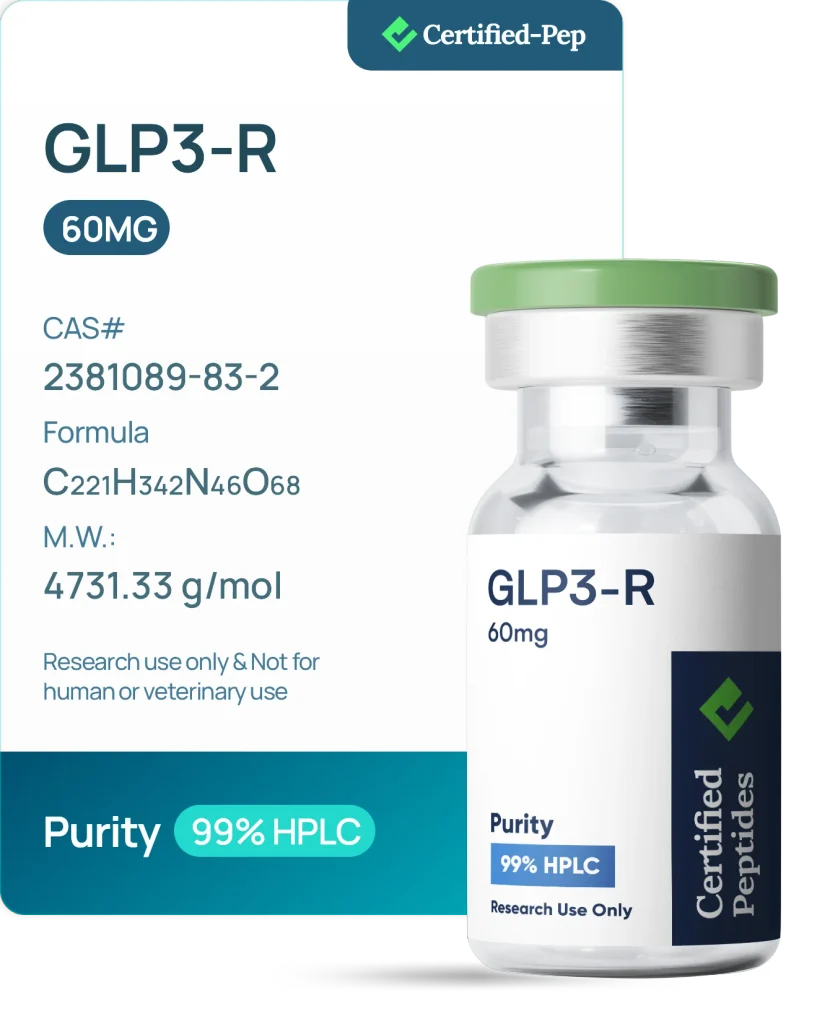
What is GLP-3 R?
In peer-reviewed biochemical literature, GLP-3 R is the common catalog designation for Retatrutide (specifically the investigational compound LY3437943).
While single-agonist peptides like semaglutide target one receptor (GLP-1), and dual-agonists like tirzepatide target two (GLP-1 and GIP), GLP-3 R is an engineered 39-amino-acid peptide that simultaneously engages three distinct metabolic pathways:
- GLP-1 (Glucagon-Like Peptide-1) Receptor: Modulates insulin secretion and appetite pathways.
- GIP (Glucose-Dependent Insulinotropic Polypeptide) Receptor: Synergizes with GLP-1 to manage glucose levels and fat metabolism.
- Glucagon Receptor (GCGR): Actively increases energy expenditure, triggers lipolysis (fat mobilization), and promotes thermogenesis.
The inclusion of the glucagon receptor is what truly differentiates GLP-3 R. By mimicking a fasting state while keeping blood glucose stable, this triple-receptor approach has shown unprecedented potential in preclinical models for reducing liver fat and accelerating adipose tissue reduction.
Why the 60mg Vial Size Matters for Research
Peptide synthesis laboratories typically provide this material in multi-mg formats. The GLP-3 R 60mg lyophilized powder vial is explicitly engineered to accommodate larger-scale, graded comparator series and multi-lot in-vitro titration studies without requiring constant batch switching.
When analyzing receptor binding dynamics, using a single, high-purity 60mg reference standard reduces experimental variance and yields consistent biochemical baselines.
Technical Specifications & Handling Guidelines
For qualified professionals operating in controlled laboratory environments, maintaining the stability of the compound is crucial for accurate data.
- Chemical Structure: Acylated multi-receptor peptide with a lipid-diacid conjugate to enhance stability.
- Form: White-to-off-white lyophilized solid powder.
- Purity Standard: HPLC and Mass Spectrometry verified at ≥99% purity.
- Storage Protocol: Long-term storage must be maintained at -20°C (-4°F), fully sealed and protected from light and moisture.
- Reconstitution: Titration requires gentle reconstitution using sterile bacteriostatic water or saline solutions. Avoid aggressive agitation to prevent peptide degradation.
- Post-Reconstitution Shelf Life: Once liquefied, the solution must be stored at 2–8°C (36–46°F) and utilized within a 14-to-28-day window.
Important Legal & Research Classification
It is vital for biochemical research teams to note that GLP-3 R is strictly an investigational compound. While Phase 3 human clinical trials for Retatrutide are being conducted by its primary developer, Eli Lilly, the bulk lyophilized peptides available on the commercial market are strictly for laboratory and in-vitro research use only.
These reference materials are not approved by the FDA for human or animal consumption, veterinary use, or compounding pharmacy manufacturing. Laboratory managers should always ensure they source materials from facilities that provide a lot-matched Certificate of Analysis (COA) to verify low endotoxin levels and strict compound purity.