
The landscape of metabolic research is shifting rapidly. While first-generation single-receptor options and dual-receptor alternatives like tirzepatide have dominated recent discussions, a new class of molecules is capturing the attention of laboratory investigators worldwide. At the center of this excitement is the GLP-3R peptide, a compound driving the future of multi-pathway obesity and diabetes models.
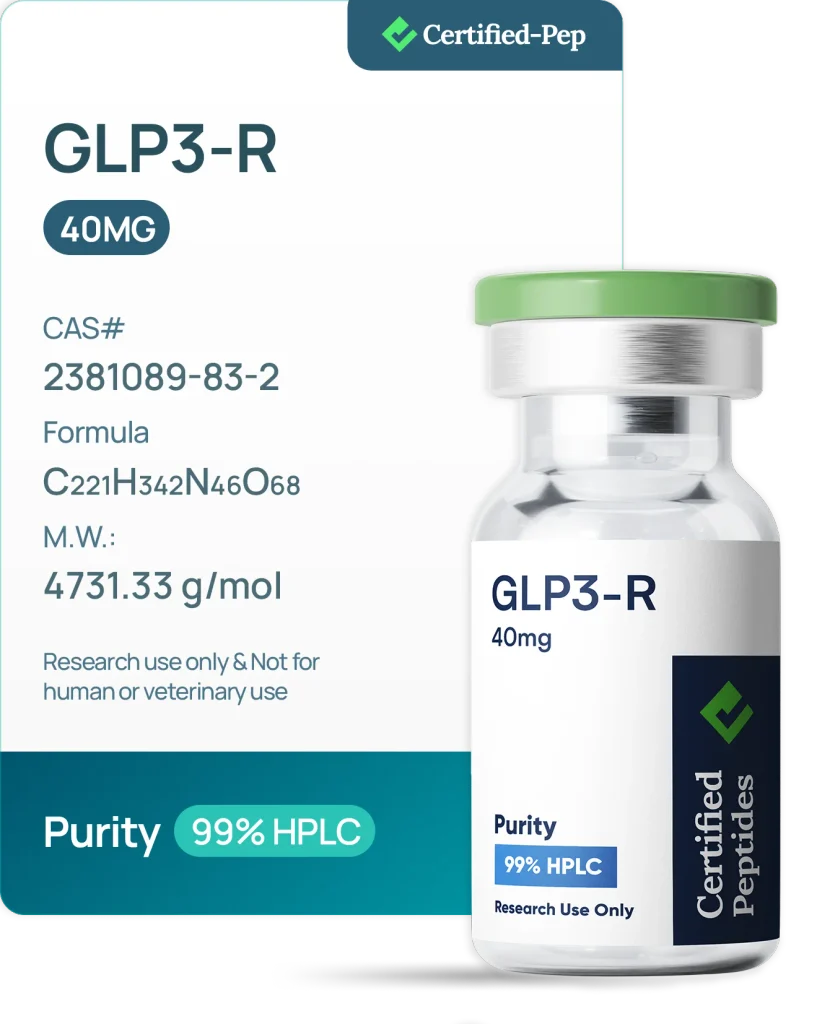
For laboratories scaling up their evaluation of multi-agonist signaling, the GLP3-R 40mg configuration has emerged as a standard baseline for major in-vitro and analytical workflows.
What is the GLP-3R Peptide?
Though frequently referred to colloquially on the internet as “GLP-3,” the term is actually a scientific misnomer. There is no natural “GLP-3” hormone. Instead, the GLP-3R peptide serves as a catalog designation for specialized triple receptor agonists—most notably the investigational compound retatrutide (LY3437943).
Unlike existing medications that target only one or two pathways, this unique synthetic peptide is engineered to simultaneously engage three distinct metabolic systems:
- GLP-1 (Glucagon-Like Peptide-1)
- GIP (Glucose-Dependent Insulinotropic Polypeptide)
- Glucagon Receptors
The Power of Triple-Agonist Systems
What makes a retatrutide research compound stand out from its dual-agonist predecessors is the inclusion of the glucagon receptor. In cell-based and animal research models, activating GLP-1 and GIP primarily influences insulin secretion, glycemic regulation, and appetite signaling.
The addition of the glucagon pathway introduces a “gas pedal” effect. It stimulates lipolysis (the mobilization and breakdown of fat) and increases energy expenditure. This comprehensive approach allows researchers to study complex metabolic mechanisms and sustained energy balance in unprecedented ways.
Why Researchers Utilize the GLP3-R 40mg Format
When setting up controlled, multi-dose laboratory profiles, consistency and concentration control are vital. Purchasing high-purity metabolic research peptides in a GLP3-R 40mg lyophilized powder vial provides several experimental advantages:
- Precision Titration Modeling: Higher-capacity vials allow laboratories to run extensive dilution and titration curves across multiple control groups without constantly switching batches.
- Lyophilized Stability: In its freeze-dried form, the peptide can be stored long-term at -20°C, maintaining its structural integrity until it is reconstituted with bacteriostatic water for active testing.
- Receptor Interaction Testing: It serves as an essential comparator to isolate exactly how much glucagon-receptor engagement contributes to overall metabolic signaling compared to single or dual pathways.
Essential Regulatory and Compliance Note
Because of the intense mainstream media coverage surrounding these triple-receptor targets, it is crucial to clarify their current status. The GLP-3R peptide is an investigational agent still undergoing phase 3 clinical evaluations. It is strictly restricted to in-vitro laboratory research and development. It is not FDA-approved, and under no circumstances is it cleared for human, animal, or clinical consumption.
For certified facilities looking to expand their metabolic horizons, analyzing this triple-agonist structure offers an incredibly promising window into the future of biological research.
Is there a difference between GLP-1 and GLP-3R?
Yes. GLP-1 is a natural hormone produced by the human body that regulates blood sugar and appetite. GLP-3R is not a natural human hormone; it is a laboratory catalog shorthand for a synthetic peptide that activates three distinct metabolic receptors (GLP-1, GIP, and glucagon) simultaneously.
What does the “40mg” designation mean?
The 40mg label specifies the total mass of the freeze-dried peptide compound contained within a single laboratory vial. This format allows researchers to precisely dilute the powder into a liquid solution to run controlled, varied-strength test groups over multiple days without changing product batches.
Can consumers buy GLP-3R for weight loss?
No. These compounds are strictly for laboratory research and development. They are highly experimental, have not been approved by the FDA or regulatory agencies for safety or efficacy in humans, and are legally restricted from consumer distribution or personal use.