
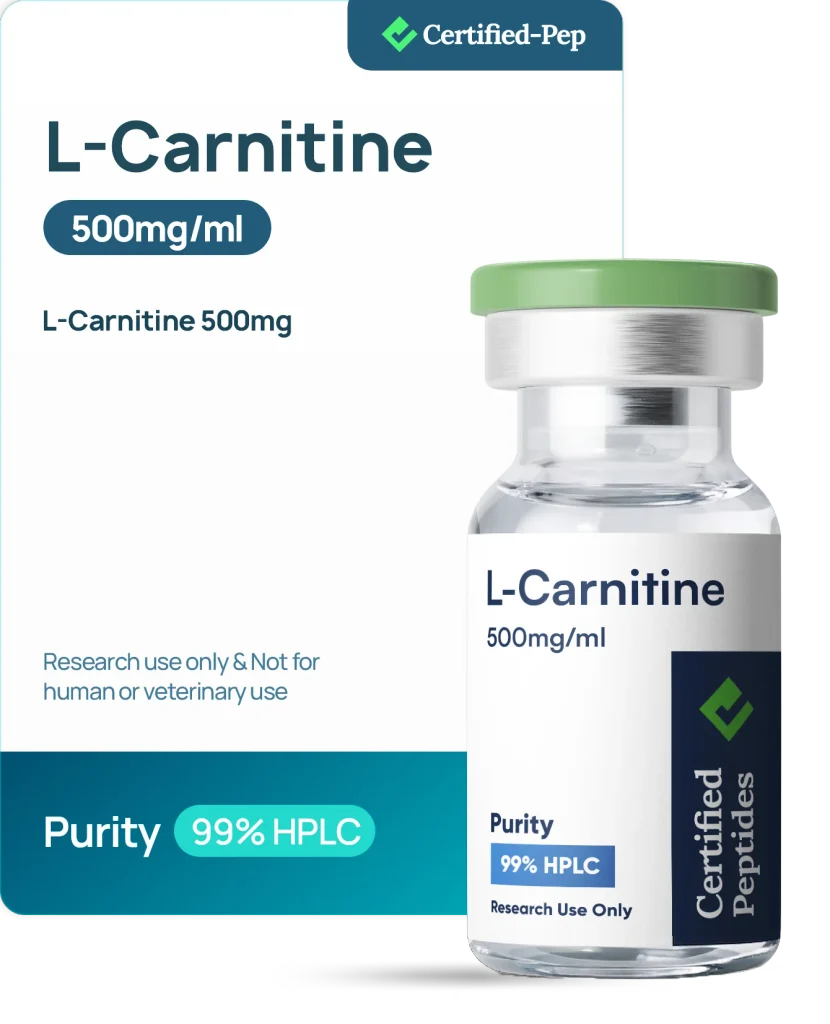
L-Carnitine 500 MG/ML is a concentrated formulation of L-carnitine, a naturally occurring compound involved in the body’s transport of long-chain fatty acids into mitochondria, where they can be used for energy production.
L-carnitine is widely discussed in nutritional science, metabolic research, and clinical literature. Its role in fatty-acid metabolism makes it an important subject for researchers examining energy metabolism and cellular function.
Understanding L-Carnitine 500 MG/ML
L-Carnitine is involved in several biological processes, particularly fatty-acid transport and mitochondrial energy metabolism. A concentration labelled 500 MG/ML indicates 500 milligrams of L-carnitine per millilitre of solution.
When evaluating L-Carnitine 500 MG/ML, important product-quality considerations include:
- Clearly stated ingredient concentration.
- Verified product identity and composition.
- Batch-specific Certificate of Analysis (COA).
- Appropriate purity and quality testing.
- Manufacturing and storage documentation.
- Clear regulatory and intended-use information.
Frequently Asked Questions
1. What does L-Carnitine 500 MG/ML mean?
It indicates a concentration of 500 milligrams of L-carnitine per millilitre of solution.
2. What is L-Carnitine studied for?
L-carnitine is studied for its role in fatty-acid metabolism, mitochondrial function, and cellular energy production.
3. What quality documents should suppliers provide?
Relevant documentation includes ingredient specifications, batch records, identity testing, purity analysis, and a Certificate of Analysis.
4. Is injectable L-Carnitine approved for medical use?
Certain levocarnitine injectable formulations are FDA-approved for specific medical indications, including carnitine deficiency associated with certain metabolic disorders and dialysis. Approval of one formulation does not establish approval of every 500 MG/ML product.